If you run a restaurant, cloud kitchen, or retail delivery operation, you already know the pattern. Orders go out. The phone starts ringing. “Where is my order?”
These calls are not random. They are signals. Signals that customers cannot see what is happening.
Today, customers expect visibility. As digital ordering continues to grow globally, real-time tracking is no longer optional. When customers cannot track their order, they call. When they call, your team stops focusing on production and starts answering repetitive status updates.
The root issue is rarely the driver or the kitchen. It is usually the absence of structured communication powered by proper delivery management software.
Without integrated order and delivery management software, tracking becomes manual. Staff check WhatsApp. Drivers get called. Dispatchers interrupt workflows. Every manual step increases friction.
Manual tracking creates uncertainty. Uncertainty creates calls.
In this guide, you will learn practical, system-level steps to reduce “Where is my order?” calls by up to 60 percent using live delivery updates built into modern delivery management software.
Why “Where Is My Order?” Calls Destroy Operational Efficiency
Status calls are not random. They reveal missing visibility inside your operation. When customers cannot see delivery progress, they seek reassurance. That reassurance usually comes through your team.
Without structured updates powered by proper delivery management software, every inquiry becomes manual and disruptive.
The impact shows up quickly:
- Repetitive support inquiries
- Staff distraction from core tasks
- Slower kitchen coordination
- Poor customer experience
Over time, these interruptions increase the cost of customer service interruptions and weaken overall restaurant operational efficiency. The real issue is the absence of integrated order and delivery management software.
Step 1 – Map Where Tracking Breaks in Your Delivery Workflow
Before reducing calls, you need clarity. Most “Where is my order?” inquiries happen at predictable friction points. They are not emotional reactions. They are information gaps.
The first step is to identify exactly where visibility stops inside your workflow and where customers lose confidence.
Audit Your Current Order Flow
Start by mapping your complete order journey from confirmation to delivery. Write it down clearly. Then mark where customers stop receiving automatic updates.
- Order received
- Kitchen accepted
- Driver assigned
- Out for delivery
- Delivered
Now ask a simple question: at which stage does customer visibility pause? Many businesses update only at order confirmation and delivery completion.
Everything in between depends on manual updates. That gap is where calls begin. Strong delivery support automation ensures visibility continues across every stage, not just the first and last.
Identify Manual Status Dependencies
Next, identify where your team manually confirms status. If drivers receive calls, dispatch checks WhatsApp, or staff provide updates verbally, those are call triggers. Each manual dependency increases incoming inquiries.
Step 2 – Implement Real-Time Order Tracking
Once you identify where visibility breaks, the next step is structural correction. Calls reduce when customers see progress without asking. That requires more than simple notifications.
It requires a properly integrated real time order tracking system built into your delivery management software, not a patchwork of manual updates.
What a Real Time Order Tracking System Must Include
A modern real time order tracking system is not just a map. It is structured communication built into your order and delivery management software.
It should include:
- Automatic order confirmation
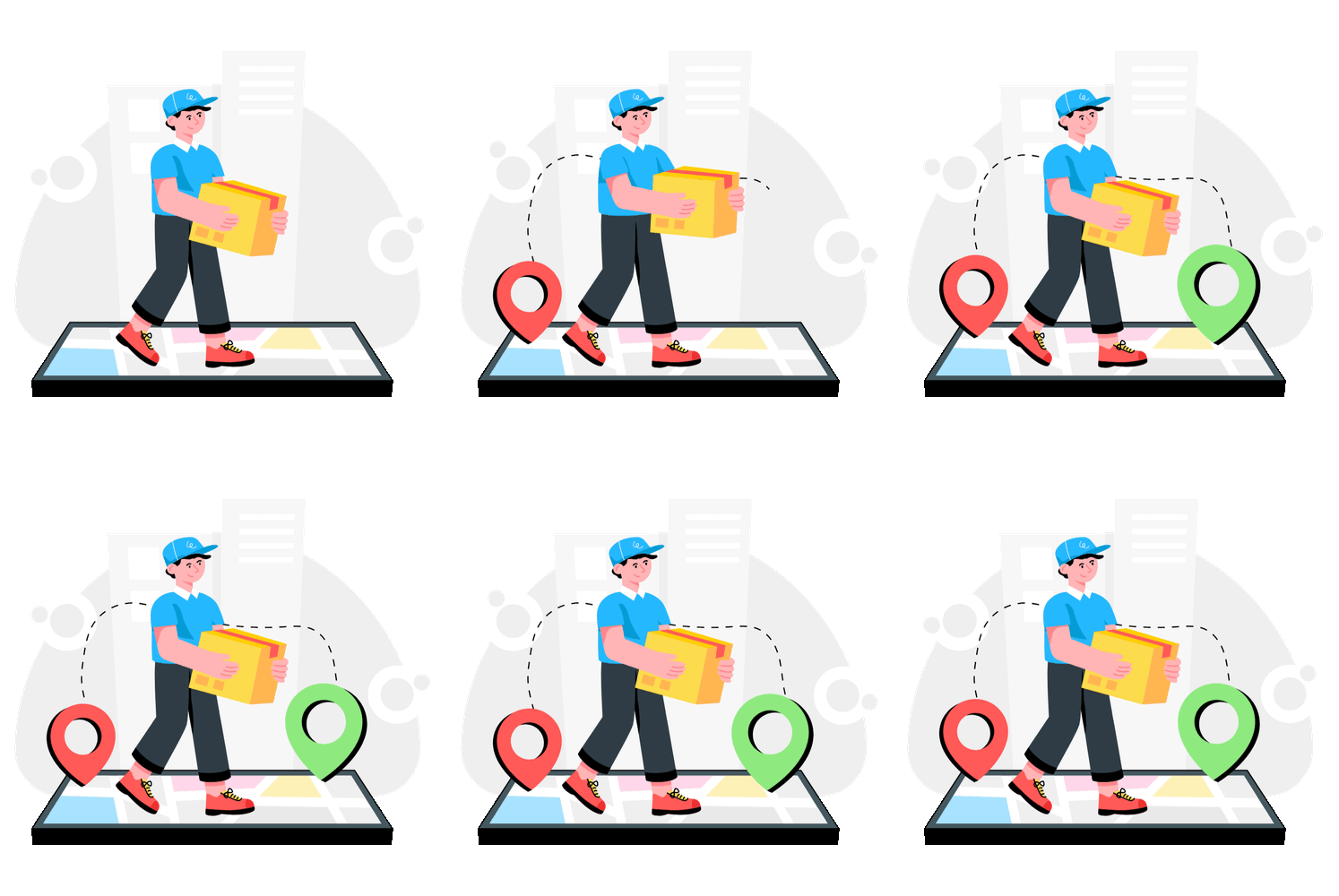
- Live driver location tracking
- Delivery stage notifications
- SMS + app updates
- Estimated delivery time recalculation
Strong delivery tracking software updates automatically when drivers move, orders are delayed, or routes change. An effective automated order tracking system recalculates ETAs without human input.
Operators should choose systems that update automatically without manual intervention. Manual triggers defeat the purpose of automation.
This is where commercial-grade delivery management software differs from basic tracking tools. It eliminates the need for support involvement entirely.
Customer View vs Internal Dashboard View
Customers need simple, real-time visibility. Operations teams need a structured dashboard showing driver movement, delivery stages, and delays. When both views sync automatically, status calls drop dramatically.
Step 3 – Automate Proactive Notifications
Real-time tracking creates visibility. Proactive communication eliminates uncertainty. Customers should not feel the need to check progress constantly. Instead of waiting for inquiries, your system should anticipate them.
When updates are automated inside your delivery management software, reassurance happens before a call is placed. That is the shift from reactive support to structured clarity.
An effective system should trigger updates at every stage:
- Order confirmed
- Preparing
- Out for delivery
- Near you
- Delivered
According to Salesforce research, 64% of customers expect companies to interact in real time, reinforcing the need for instant updates across service channels.
Modern automated delivery notifications built into an order and delivery management software communicate automatically without dispatcher involvement.
A strong integrated delivery platform recalculates status dynamically and updates customers instantly.
The result is measurable. Fewer interruptions. Lower support volume. Stronger operational control.
Step 4 – Compare Manual Tracking vs Automated Delivery System
At this stage, the difference becomes structural. Reducing calls is not about training staff to respond faster.
It is about removing the need to respond at all. When you compare manual tracking with a fully integrated automated system, the operational gap becomes clear.
Manual processes depend on people. An automated delivery system depends on structured logic built into your restaurant delivery management system.
Here is the direct comparison:
| Manual System | Automated Delivery Tracking Software |
|---|---|
| Staff answers calls | Customers track in real time |
| No visibility between stages | Live driver location updates |
| High support load | Reduced support workload |
| Manual ETA confirmations | Dynamic, automated recalculations |
In a manual environment, dispatchers interrupt drivers and kitchens to provide updates. In contrast, modern delivery tracking software updates automatically based on driver movement and delivery milestones.
This is where commercial-grade order and delivery management software creates measurable impact. Instead of absorbing support pressure, the system absorbs it.
The result is not just fewer calls. It is lower labor cost, improved workflow control, and stronger operational predictability.
Step 5 – Measure the 60% Reduction (Proof & Metrics)
Reducing “Where is my order?” calls should be visible in your numbers. Once live tracking is active inside your delivery management software, measurement becomes essential. Without data, improvement remains an assumption.
According to Salesforce’s State of the Connected Customer report, 64% of customers expect companies to respond and interact in real time, reinforcing the importance of structured, automated updates.
Track Before vs After
Measure these operational efficiency metrics before and after implementing automation:
- Daily status call volume
- Support time per order
- Delivery time variance
- Customer satisfaction score
Strong delivery performance monitoring inside your order and delivery management software will show the difference clearly. If calls fall from 100 per day to 40, the reduction is measurable.
Ask your team:
“Do we know our daily status call count?”
Clarity proves impact.
Choosing the Right Delivery Tracking Software
Reducing calls depends on choosing the right system. Not all platforms provide structured visibility. Some offer basic tracking, while others integrate automation across the entire workflow.
When evaluating options, focus on operational depth, not just interface design. The right delivery management software should eliminate manual status handling entirely.
What to Look For?
If you are evaluating the best delivery tracking software for restaurants, use this checklist:
- Real-time GPS driver tracking
- Automated SMS + app alerts
- Full dispatch visibility
- Kitchen integration
- Analytics dashboard
A reliable restaurant dispatch software solution should connect orders, drivers, and customers in one system. For delivery-heavy brands, especially growing operators, a structured cloud kitchen delivery management software ensures status updates are automated from preparation to drop-off.
Mid-blog reminder:
“If you're evaluating delivery tracking software, compare features before you commit.”
Choosing correctly prevents support overload before it begins.
Conclusion
Cutting “Where is my order?” calls by 60% is not about improving response speed. It is about removing the need for the call in the first place.
When customers have continuous visibility through structured updates, uncertainty disappears.
Live tracking, proactive notifications, and integrated workflows turn reactive support into automated communication.
This shift requires intentional implementation of modern delivery management software that connects kitchen, dispatch, and customer in one system. When updates happen automatically, support pressure drops, workflows stabilize, and teams regain focus.
Support reduction is not luck. It is a systems decision.
Cut “Where Is My Order?” Calls With Live Delivery Tracking Software
FAQs
Live delivery updates reduce support workload by automatically informing customers at every stage of the order. When delivery management software sends real-time status notifications, customers no longer need to call for updates. This reduces repetitive inquiries, lowers staff interruptions, and improves overall operational focus.
The best delivery tracking software for restaurants provides real-time GPS tracking, automated notifications, dispatch visibility, and kitchen integration. A reliable order and delivery management software connects orders, drivers, and customers in one system, ensuring status updates happen automatically without manual follow-up.
Yes, cloud kitchens can effectively use an automated order tracking system to provide continuous visibility to customers. Since cloud kitchens operate entirely on delivery, structured updates through cloud kitchen delivery management software help reduce status calls and improve operational efficiency.
Most modern delivery tracking software platforms can be implemented within a few days, depending on operational complexity. Once integrated with dispatch and kitchen workflows, a structured delivery management software begins sending automated updates immediately.
Yes, delivery tracking improves customer satisfaction by reducing uncertainty and increasing transparency. A well-integrated live order tracking system for restaurants keeps customers informed throughout the delivery process, building trust and improving overall service experience.