A customer searches for a restaurant online. Your food is better. Your reviews are strong. Your prices are competitive. Yet somehow the order goes to a large chain.
Sound familiar?
Many independent restaurant owners believe they are losing customers because large brands have bigger budgets. While marketing budgets certainly help, they are not the main reason chains win online.
In most cases, large chains succeed because they have built systems that make discovery easier, ordering faster, and repeat purchases more convenient.
The good news is that customers are not searching specifically for large brands. They are searching for great food, convenience, reliability, and trust. Independent restaurants already have many advantages in these areas.
The challenge is translating those advantages into the digital world.
If you can improve your visibility, strengthen your online ordering system for restaurants, create a better customer experience, and build stronger relationships with your customers, you can compete successfully against much larger competitors.
Let's look at how.
Why Big Chains Seem Impossible to Beat Online
Before you can compete effectively, you need to understand what is really happening.
Most restaurant owners assume chains win because they have more money. That is only part of the story.
The real reason is much simpler. Large chains have removed friction from the customer journey. Let's explore why:
Customers Reward Convenience
Think about how customers behave.
-
They are hungry.
-
They want food quickly.
-
They open Google or a delivery app.
-
And within seconds, they are comparing options.
At that moment, convenience often matters more than brand loyalty.
If one restaurant makes ordering simple and another makes ordering difficult, customers usually choose the easier option. This is where many chains excel.
Chains Have Built Repeatable Systems
Large restaurant brands invest heavily in:
-
Mobile ordering apps
-
Loyalty programs
-
Customer databases
-
Fast checkout experiences
-
Delivery management
Every part of the customer journey is designed to encourage repeat purchases. The lesson is not that you need to become a chain. The lesson is that you need better systems.
Independent Restaurants Already Have What Chains Want
Many chains spend millions trying to create something you already possess.
You have:
-
Real community relationships
-
Authentic customer experiences
-
Local trust
-
Personal connections
The opportunity is making these strengths visible online.
Where Independent Restaurants Actually Compete Today
Many restaurant owners think competition happens inside food delivery apps. That is only one part of the picture. Today's competition starts long before customers place an order. Here, where independent restaurants actually compete:
Google Search
When customers search:
-
Best pizza near me
-
Burger delivery near me
-
Family restaurant near me
Google decides which restaurants get attention first. If your restaurant is not visible, you lose opportunities before customers even see your menu.
Google Business Profile
This may be the most overlooked marketing asset for independent restaurants. Customers check ratings, reviews, photos, operating hours, and delivery options before making decisions.
A strong profile can outperform a larger competitor with a weaker reputation.
Restaurant Websites
Your website is no longer a digital brochure. It is a sales channel.
Your customers expect:
-
Mobile-friendly design
-
Fast loading pages
-
Easy navigation
-
Direct ordering
If your website creates frustration, your customers leave.
Delivery Experience
Customers compare every delivery experience. They remember delivery speed, order accuracy, communication, and reliability. One poor experience can send them elsewhere.
Expert Tip:
Your website should answer one question immediately: "Can I order food quickly?" If customers have to search for the ordering button, you are already losing conversions.
Big Chains Are Not Winning Because They Are Bigger
Large brands are not winning because they are large. They are winning because they have built systems that make customer decisions easier. Here's how:
Customers Buy What Is Easy
Suppose two restaurants serve equally good food.
Restaurant A:
-
Fast ordering
-
Mobile app
-
Loyalty rewards
-
Delivery tracking
Restaurant B:
-
Slow website
-
No online ordering
-
No delivery updates
Which restaurant gets the order?
Most customers choose convenience. Not because they love the brand. But because they value simplicity.
Convenience Creates Loyalty
Many restaurants believe loyalty comes only from food quality. Food quality matters. But convenience matters too.
Your customers stay loyal when ordering feels effortless. That is why restaurant ordering software has become so important. It removes barriers between customer intent and customer action.
Build Your Direct Ordering Ecosystem
One of the biggest mistakes independent restaurants make is relying entirely on third-party marketplaces. Marketplaces generate visibility. But they do not create ownership.
The Problem With Marketplace Dependency
A customer orders from your restaurant through a delivery platform. They enjoy the meal. And a week later, they want food again.
Where do they go? Back to the marketplace.
Now your restaurant is competing against dozens of alternatives for the same customer. You earned the customer once. But you do not own the relationship.
Why Direct Orders Matter
Direct orders provide better margins, customer ownership, stronger retention, and a better marketing opportunities More importantly, they create long-term business stability.
Create an Ordering Experience Customers Prefer
Your customers should be able to:
-
Browse easily
-
Order quickly
-
Pay securely
-
Reorder instantly
The fewer clicks required, the better.
Make Mobile Ordering a Priority
Most restaurant traffic now comes from mobile devices. If your ordering experience is difficult on a phone, customers may never complete the purchase.
Expert Tip:
Do not treat your website as a marketing tool. Treat it as your most important salesperson. It should be generating orders every day.
Win Local Search Before Your Competitors Do
Independent restaurants often underestimate how much business comes from local search. Here's how you can win local search
Your Google Business Profile Is Critical
Many customers never visit your website.
They make decisions directly from Google.
Keep your profile updated with:
-
Accurate business information
-
Photos
-
Menu details
-
Ordering links
Reviews Influence More Decisions Than Advertising
Customers trust other customers. Positive reviews build confidence. And negative reviews create hesitation.
So, you must encourage your satisfied customers to leave feedback. And you must respond professionally to every review.
Create Content Around Local Intent
Your customers often search for local recommendations.
Topics such as: best family meals, local dining experiences, and seasonal specials can improve visibility while demonstrating expertise.
Stay Consistent Everywhere
Ensure your business information remains consistent across all platforms. Inconsistent details create confusion for both customers and search engines.
Turn First-Time Customers Into Regular Customers
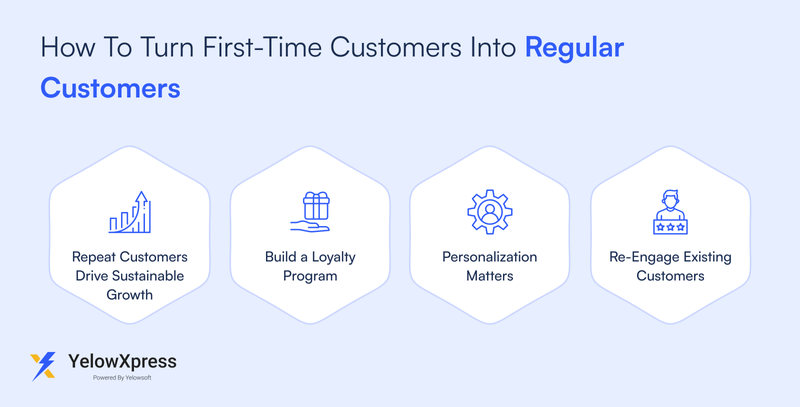
Acquiring customers is important. Keeping them is even more valuable. Here's how you can make 1st time customers you\r regular ones:
Repeat Customers Drive Sustainable Growth
A customer who orders five times per year is often more valuable than five customers who order once.
Repeat customers:
-
Spend more
-
Trust your brand
-
Refer others
-
Require less marketing effort
Build a Loyalty Program
Rewards encourage customers to return, such as points systems, free items, and exclusive discounts.
Personalization Matters
Large chains often struggle to deliver personalized experiences. But independent restaurants can use this advantage. Simple actions such as personalized offers or birthday rewards help strengthen relationships.
Re-Engage Existing Customers
Many customers stop ordering simply because they become distracted. Email campaigns, SMS messages, and app notifications help bring them back.
Expert Tip:
The easiest sale is often the customer who already knows and trusts your restaurant. Focus on retention as much as acquisition.
Use Customer Data Like Successful Brands Do
The best restaurant operators make decisions based on information, not assumptions. Here's how!
Understand Ordering Patterns
Look for trends such as:
-
Popular menu items
-
Peak ordering hours
-
High-value customers
Improve Promotions
Data helps identify which offers actually generate results.
Make Smarter Operational Decisions
When you understand customer behavior, you can improve:
-
Staffing
-
Inventory
-
Marketing
-
Delivery operations
InsightPotential BenefitPeak ordering timesBetter staff planningPopular menu itemsImproved promotionsRepeat customersHigher retentionDelivery locationsBetter efficiency
Data does not replace experience. It enhances it.
Compete on Experience, Not Size
This is where independent restaurants have their greatest opportunity. You do not need to outspend large chains. You need to create a better experience.
Customers Remember Experiences
They remember:
-
Friendly interactions
-
Reliable deliveries
-
Easy ordering
-
Consistent quality
These factors influence repeat business more than advertising budgets.
Focus on What Makes You Different
Do not try to imitate large chains. Instead, highlight:
-
Local roots
-
Community involvement
-
Authentic stories
-
Unique menu offerings
These qualities are difficult for chains to replicate.
Make Every Interaction Count
Every order is an opportunity to strengthen trust. The restaurants that consistently deliver positive experiences build stronger customer relationships over time.
Conclusion
Many independent restaurant owners believe they are competing against bigger budgets, larger marketing teams, and nationally recognized brands. While those advantages exist, they are not the reason large chains succeed online.
The real difference is that chains have built systems that make discovery easier, ordering simpler, and repeat purchases more convenient.
The encouraging reality is that independent restaurants can build many of those same advantages. You can improve local visibility, strengthen your restaurant online ordering platform, create better delivery experiences, retain more customers, and reduce dependence on third party marketplaces.
Most importantly, you already possess strengths that large chains spend years trying to create. You have local trust, authentic relationships, community connections, and the ability to deliver personalized experiences.
The restaurants that thrive online over the next few years will not necessarily be the largest. They will be the ones that own their customer relationships, make ordering effortless, and give customers a reason to come back again and again.
Your Next Loyal Customer Should Order Directly From You
FAQs
Yes. Independent restaurants can compete online by improving local search visibility, offering direct online ordering, building customer loyalty, and delivering personalized experiences that large chains often struggle to provide.
Direct online ordering helps restaurants reduce commission fees, retain customer data, increase profit margins, and build stronger customer relationships without relying entirely on third party delivery platforms.
Restaurants can increase direct orders by optimizing their website, improving local SEO, encouraging customer reviews, launching loyalty programs, and promoting their own ordering channels consistently.
Independent restaurants often have stronger community connections, personalized customer service, and authentic brand experiences, which help build trust and encourage repeat customer purchases.
Local SEO improves visibility in location-based searches such as "restaurants near me" or "food delivery near me," helping nearby customers discover and order from your restaurant.
Restaurants can reduce marketplace dependency by creating direct ordering channels, offering exclusive rewards, building loyalty programs, and encouraging customers to order through their website or app.